Affiliate disclosure: This guide contains affiliate links. Purchases may earn us a commission at no extra cost to you.
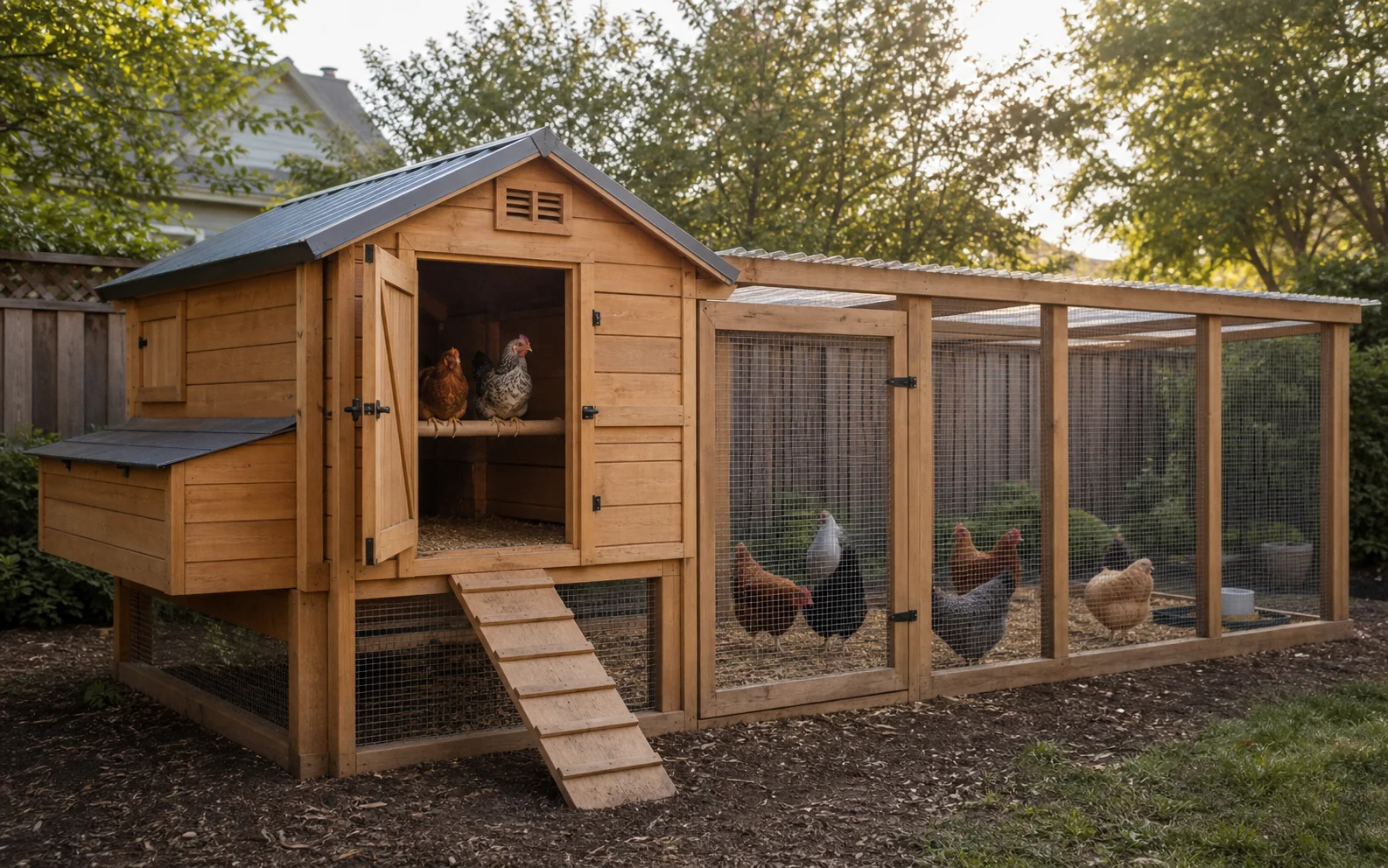
The simplest coop sizing rule for standard backyard hens is 4 square feet inside the coop and 10 square feet in the outdoor run per hen. That gives hens room to roost, move, eat, escape minor pecking-order drama, and stay healthier when weather or city rules keep them contained.
Use this guide for quick planning, then check the coop size calculator if you want the numbers adjusted for large breeds, bantams, hot climates, cold climates, or mostly confined flocks.
Before buying a coop, check your local rules in the chicken laws directory. Some cities limit flock size, require permits, or set coop setbacks that determine where the coop can legally sit. For example, compare city-level rules on the Arizona, California, North Carolina, and Georgia pages before choosing a fixed coop footprint.
Match coop size to your city limit.A 10-hen coop is wasted money if your city allows only five hens or requires a setback your yard cannot meet.
Coop size for 4 hens
For 4 standard hens, plan for at least 16 square feet inside the coop and 40 square feet of run space. A 4-by-4-foot coop is a common minimum footprint, though a little extra space makes cleaning easier.
Four hens is a good starter flock for compact yards. If your city allows only a small flock or your lot has tight setbacks, a compact backyard chicken coop can be a reasonable option if the interior dimensions are honest and the run is large enough.
Buying tip: many small coops advertise optimistic capacity. If a listing says it fits 6 hens but the interior floor is closer to 12 square feet, treat it as a 3-hen coop, not a 6-hen coop.
Coop size for 6 hens
For 6 standard hens, plan for at least 24 square feet inside the coop and 60 square feet of run space. This is one of the most common beginner flock sizes because it gives steady egg production without feeling like a large operation.
For this flock size, look for a coop around 4-by-6 feet or larger, plus an attached run. A premium compact option such as an Omlet Eglu Cube search may work for smaller flocks, while an OverEZ medium coop search can help compare larger ready-made options.
Six hens usually need about 2 nest boxes and 6 feet of roost space. More nest boxes are not always better; hens often share favorites.
Coop size for 8 hens
For 8 standard hens, plan for at least 32 square feet inside the coop and 80 square feet of run space. A 4-by-8-foot coop is a simple reference point, but bigger is better if your birds will spend most of the day enclosed.
Eight hens are where underbuilt runs start to show problems: bare ground, odor, mud, and boredom. If you build your own run, budget for strong mesh and secure edges. 1/2-inch hardware cloth is one of the most useful predator-proofing materials for vents, windows, run sides, and apron protection.
For warm climates or exposed yards, shade cloth for chicken runs can make a big difference in summer comfort.
Coop size for 10 hens
For 10 standard hens, plan for at least 40 square feet inside the coop and 100 square feet of run space. A 5-by-8-foot coop is a useful minimum reference, but this flock size benefits from more interior space and a generous run.
Ten hens also need more water capacity and better feed storage. A large poultry waterer reduces daily refilling, and a galvanized feed storage can helps keep pests and moisture out of feed.
For a ready-made structure, compare larger coop options such as the OverEZ large coop, but still check the true floor dimensions and your city’s setback rules before buying. The state chicken-law pages are useful here because they show permits, hen limits, rooster rules, and coop-placement notes side by side.
When to size up
The 4-square-foot coop and 10-square-foot run rule is a minimum for standard hens. Size up when:
Breeds are largeBrahmas, Orpingtons, and Jersey Giants need more room than bantams or slim layers.
Birds stay enclosedMostly confined hens need more run space to stay busy and reduce odor.
Predator risk is highA secure run may matter more than occasional free-ranging.
Weather is extremeHot, wet, or freezing climates can keep birds inside or under cover longer.
Penn State Extension notes that poultry housing should protect birds from weather, predators, injury, and theft, while providing adequate space, ventilation, nesting areas, perches, and access to feed and water.
Nest boxes, roosts, and layout
Plan for about 1 nest box per 3 to 4 hens and about 12 inches of roost space per standard hen. Keep roosts higher than nest boxes so hens do not sleep in the boxes and soil the bedding.
Coop layout matters as much as square footage. Prioritize:
- Easy access for cleaning
- Dry bedding
- Ventilation above bird level
- Roosts away from direct drafts
- Nest boxes in a quieter area
- Feed and water placed where they stay clean
Use both calculators before buying
If you are still choosing a setup, use the coop size calculator first. Once you know the size you need, use the startup cost calculator to estimate the budget for the coop, run, birds, feed, water, bedding, and predator proofing.
Practical buying order: confirm local laws, calculate coop size, estimate startup cost, then buy the coop and predator-proofing supplies. That order helps avoid spending money on a coop that is too small or illegal to place in your yard.
References
- Penn State Extension: Small Scale Poultry Housing
- University of Georgia Extension: Management Guide for the Backyard Flock
- CDC: Backyard Poultry
Matched next steps
Recommended supplies for this guide
Practical options selected to fit the result above.
Compact Backyard Chicken Coop
Compact lotsSmall-flock coop option for 3-6 hens where city limits or lot setbacks make a compact footprint important.
Why it fits: Compact lots
Available on Amazon
Compare on Amazon →OverEZ Classic Medium Chicken Coop
Amish-built, made in USA. Houses up to 10 hens while staying compact enough for many suburban backyards.
Why it fits: Useful first-flock gear
Available on Amazon
Compare on Amazon →OverEZ Classic Large Chicken Coop
Best for 8-hen limitAmish-built, made in USA. Houses up to 15 hens. Designed for hot and cold climates. Assembles in under 60 minutes.
Why it fits: Best for 8-hen limit
Available on Amazon
View on Amazon →Affiliate links — we may earn a small commission at no extra cost to you.