Affiliate disclosure: This guide contains affiliate links. Purchases may earn us a commission at no extra cost to you.
Most backyard chicken keepers should plan for at least 4 square feet inside the coop and 10 square feet in the outdoor run per standard hen. That is a practical minimum for common laying breeds when the flock has a secure coop, an attached run, and regular access to feed, water, shade, roosts, and nest boxes.
Space planning is not just about comfort. Crowded chickens are more likely to pick feathers, bully weaker birds, scratch a run down to mud, develop odor problems, and create neighbor complaints. If your birds will spend most of the day enclosed, start with the minimum and then size up.
Use this guide to estimate the footprint, then check the coop size calculator for a flock-specific recommendation.
Quick planning shortcut.Choose the legal flock size first, then calculate the coop and run around that number.
Quick space chart
For standard-size hens, use these starter minimums:
For 10 hens, plan for at least 40 square feet of coop space, 100 square feet of run space, and 10 feet of roost space. For a detailed flock-by-flock breakdown, see the chicken coop size guide for 4, 6, 8, and 10 hens.
Coop space vs. run space
Coop space and run space solve different problems.
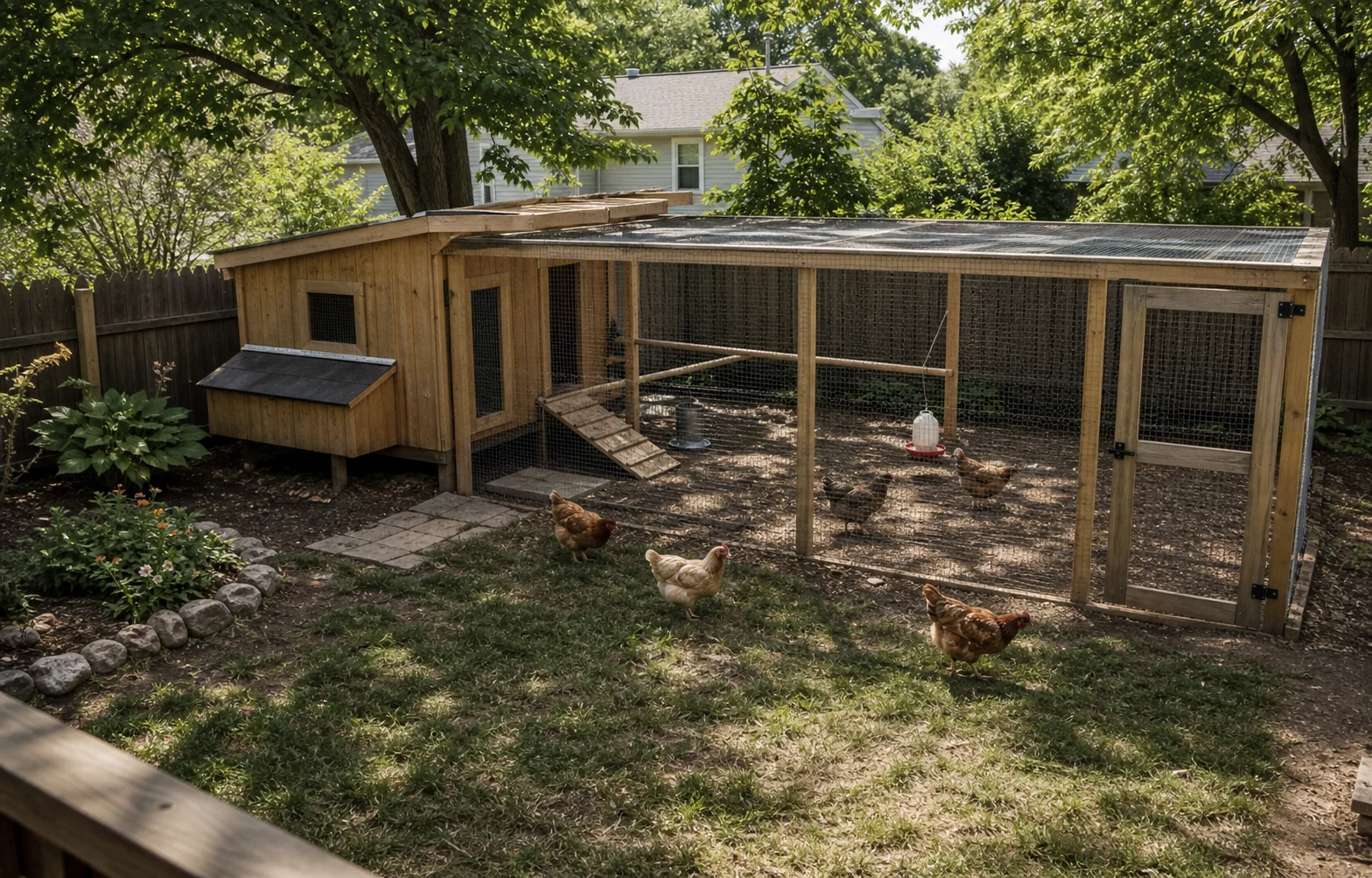
The coop is the enclosed shelter where chickens sleep, lay eggs, avoid bad weather, and stay protected at night. It needs dry bedding, predator-resistant walls and vents, roosts, nest boxes, and enough room for birds to move without crowding.
The run is the secure outdoor area where chickens scratch, dust bathe, forage, eat, drink, and spend most daylight hours when they are not free-ranging. A generous run reduces mud, odor, boredom, and pecking-order stress.
A tiny coop with a large run can still fail if the birds are locked inside during storms or winter. A roomy coop with a tiny run can also fail because the outdoor area gets overused quickly. Plan both.
How much indoor coop space per chicken?
A good beginner rule is:
- Standard hens: at least 4 square feet per bird inside the coop
- Large breeds: 5 to 6 square feet per bird is safer
- Bantams: 2 to 3 square feet per bird can work if the run is generous
These numbers assume the coop is well-ventilated, dry, easy to clean, and used mostly for roosting and laying. If the flock will be shut inside for long stretches because of snow, storms, predators, or city rules, add extra space.
Penn State Extension notes that poultry housing should protect birds from weather, predators, injury, and theft while providing adequate space, ventilation, nesting areas, perches, and access to feed and water.
Buying tip: many prefab coops advertise capacity too aggressively. Check the actual interior floor dimensions. A coop with 12 square feet of usable floor space is a 3-hen coop by the 4-square-foot rule, even if the listing claims it fits more.
How much run space per chicken?
For a standard backyard setup, plan for at least 10 square feet of run space per hen. More is better if the chickens will not free-range.
Size up the run when:
Birds stay enclosedConfined flocks need more outdoor room than birds that free-range safely.
The yard gets wetSmall runs turn muddy fast in rainy climates or low-drainage areas.
Predators are commonA larger secure run may be safer than casual free-ranging.
Weather is extremeShade, covered areas, and extra room help chickens cope with heat, wind, and snow.
If you are building the run yourself, budget for strong mesh and secure edges. 1/2-inch hardware cloth is useful for vents, windows, apron protection, and high-risk openings. Basic chicken wire is better at keeping chickens in than keeping predators out.
Do chickens need free-range yard space?
Chickens do not have to free-range if they have a roomy, enriched, secure run. Free-ranging can give birds more forage and exercise, but it also increases risk from dogs, hawks, traffic, gardens, and neighbor conflicts.
If you free-range, still build the coop and run as if the birds may need to stay enclosed. There will be days when weather, predators, travel, construction, or local rules keep them in the run.
If your city requires chickens to stay contained, a mobile chicken tractor may help rotate birds onto fresh grass while keeping them enclosed.
Roosts, nest boxes, and usable layout
Square footage is only useful if chickens can actually use it. A cluttered coop with poor roost placement can feel smaller than the measurements suggest.
Plan for:
- Roost space: about 12 inches per standard hen
- Nest boxes: about 1 box per 3 to 4 hens
- Ventilation: above bird level, without direct drafts on the roost
- Access: doors or panels that make cleaning easy
- Feed and water: placed where they stay clean and do not block movement
Keep roosts higher than nest boxes so hens are less likely to sleep in the boxes. Keep feeders and waterers out of high-traffic scrape zones when possible.
Check legal setbacks before choosing the footprint
Before buying or building a coop, check your city rules. Local ordinances may limit flock size, ban roosters, require permits, or set coop setbacks from property lines, homes, doors, windows, or neighboring structures.
A 6-hen coop can be the right biological size and still be the wrong legal size if your city allows only four hens or requires a setback your yard cannot meet. Start with the chicken laws directory, then verify with your city or county before spending money on a permanent coop.
When to size up
The minimum rules are a starting point. Size up when:
- You want large breeds such as Brahmas, Jersey Giants, or Orpingtons
- The birds will be confined most of the day
- Your yard is wet, muddy, or shaded
- Winters are long or summers are very hot
- You expect to add more hens later
- You want easier cleaning and fewer odor problems
- Your neighbors are close and nuisance complaints would be costly
More space will not fix every management problem, but it makes most beginner setups more forgiving.
Simple planning formula
Use this formula for a quick estimate:
- Confirm your legal flock size.
- Multiply standard hens by 4 square feet for coop space.
- Multiply standard hens by 10 square feet for run space.
- Add about 12 inches of roost per hen.
- Add 1 nest box per 3 to 4 hens.
- Increase the numbers for large breeds, confinement, wet ground, or harsh weather.
Then use the startup cost calculator to estimate what the coop, run, hardware cloth, bedding, feeders, waterers, and birds may cost.
Practical order: check local laws, pick a realistic flock size, calculate space, price the full setup, then buy supplies. That sequence helps avoid a coop that is too small, too expensive, or illegal to place in your yard.
References
- Penn State Extension: Small Scale Poultry Housing
- University of Georgia Extension: Management Guide for the Backyard Flock
- CDC: Backyard Poultry
Matched next steps
Recommended supplies for this guide
Practical options selected to fit the result above.
Mobile Chicken Tractor
Fully enclosedFully enclosed mobile coop. Lets hens forage fresh ground while staying contained for cities that require pens, coops, or runs.
Why it fits: Fully enclosed
Available on Amazon
Compare on Amazon →1/2-Inch Hardware Cloth
Predator proofingPredator-resistant mesh for runs, vents, and coop skirts. Better than chicken wire for raccoons, snakes, and loose dogs.
Why it fits: Predator proofing
Available on Amazon
Compare on Amazon →OverEZ Classic Medium Chicken Coop
Amish-built, made in USA. Houses up to 10 hens while staying compact enough for many suburban backyards.
Why it fits: Useful first-flock gear
Available on Amazon
Compare on Amazon →Affiliate links — we may earn a small commission at no extra cost to you.