Affiliate disclosure: This guide contains affiliate links. Purchases may earn us a commission at no extra cost to you.
Backyard chicken biosecurity means using the coop’s design and your daily habits to reduce the chance that disease reaches your birds—or leaves your property with people, equipment, eggs, or animals.
The most useful beginner routine is simple: limit contact, keep dedicated coop footwear, wash hands, protect feed and water, reduce wild-bird access, isolate new or sick birds, and know whom to call when illness is unusual or severe.
USDA describes both structural biosecurity—the physical coop, run, and barriers—and operational biosecurity—the practices people follow consistently. A strong plan needs both.
Biosecurity starts before the flock arrives.Choose a cleanable, covered setup and decide where boots, tools, new birds, and sick birds will go.
Why backyard flocks need biosecurity
Infectious organisms can move through:
- New or returning birds
- Wild birds and their droppings
- Rodents, insects, pets, and other animals
- Shoes, clothing, hands, tools, crates, and vehicles
- Contaminated feed, water, bedding, or equipment
- Visitors who have recently been around other poultry
USDA reports that wild birds are an important source of highly pathogenic avian influenza exposure and that people can move contamination on footwear, clothing, equipment, and vehicles. Biosecurity also helps reduce risks from other poultry diseases.
It protects people too. CDC notes that apparently healthy backyard poultry can carry Salmonella. In April 2026, CDC announced a multistate Salmonella outbreak linked to backyard poultry and emphasized handwashing, dedicated coop footwear, and keeping birds and poultry supplies outside the home.
Build a clean line between the coop and home
Choose a clear boundary where household space ends and the poultry area begins. Keep coop-only items on the poultry side.
A practical home setup includes:
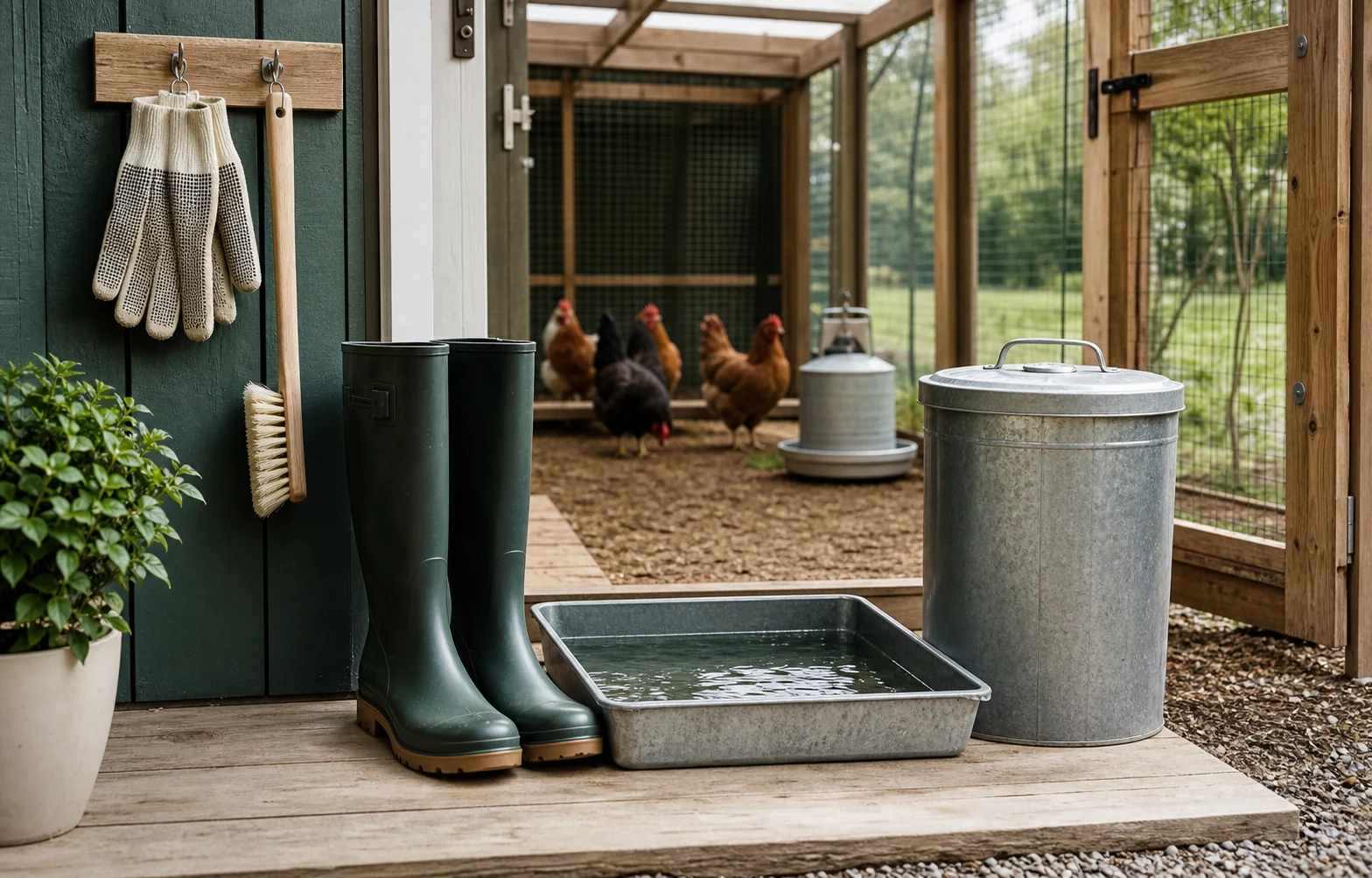
- Dedicated boots or shoes that do not enter the house
- A place to remove visible mud and manure
- Soap and running water nearby when possible
- Coop-only tools, buckets, brushes, and egg-collection supplies
- Clean storage for replacement bedding and feed
- A container or area for items awaiting cleaning
Hand sanitizer is useful when soap and water are unavailable, but USDA notes that disinfectants do not penetrate manure, feathers, mud, or caked organic material well. Remove debris first.
Control people and traffic
Most backyard flocks do not need casual visitors inside the run. Ask visitors to observe from outside unless direct access is necessary.
Before someone enters, ask whether they have recently visited another flock, poultry sale, fair, feed-store chick display, farm, or live-bird market. If entry is necessary:
- Provide clean dedicated footwear or disposable boot covers.
- Require handwashing before and after contact.
- Keep personal bags, strollers, and unnecessary equipment outside.
- Do not share uncleaned crates, tools, or carriers between flocks.
- Clean and disinfect reusable items before they leave or return.
Keep delivery and service vehicles away from the poultry area when possible. The goal is to reduce the number of pathways into the flock.
Reduce contact with wild birds and rodents
Wild birds can contaminate feed, water, soil, and equipment with droppings. Rodents also move through feed and bedding and can carry pathogens between locations.
Use these controls:
- Cover the run or use securely attached netting or roofing appropriate to the structure.
- Do not use open water sources that wild birds can access.
- Clean spilled feed promptly.
- Store feed in waterproof, secure, rodent-resistant containers.
- Repair gaps and burrows quickly.
- Keep brush, clutter, and nesting material away from the coop exterior.
- Avoid attracting wild ducks, geese, gulls, or other birds near the flock.
Read the predator-proofing guide for hardware-cloth, roof, apron, and feed-storage details. Many physical improvements help with both predators and disease exposure.
Keep feed, water, and bedding clean
Feed and water should be protected from wild birds, rodents, rain, and manure.
Daily habits:
- Refresh visibly dirty water.
- Remove wet or contaminated feed.
- Keep feeders and waterers away from roost droppings.
- Clean spills around storage and feeding areas.
- Replace wet bedding and correct the leak or drainage problem.
- Avoid carrying dirty poultry tools into feed-storage areas.
Follow product labels when cleaning and disinfecting. Cleaning removes dirt and organic matter; disinfection comes afterward on a compatible surface. Never mix cleaning chemicals, and keep birds away from unsafe concentrations or fumes.
Separate new and returning birds
New birds can appear healthy while carrying disease. Birds returning from shows, fairs, breeding visits, veterinary care, or another property also create a new exposure pathway.
Before adding birds:
- Buy from a reputable source and ask about health and testing practices.
- Prepare a separate housing area with separate tools and supplies.
- Care for the established flock before handling separated birds.
- Change or clean footwear and wash hands between groups.
- Watch for respiratory signs, diarrhea, appetite changes, parasites, lethargy, or unexpected deaths.
- Ask a poultry veterinarian or local Extension office how long separation should last for your circumstances.
Do not place a newly purchased bird directly into the established coop simply because it looks active on arrival.
Create an isolation plan before a bird gets sick
Isolation is not the same as casually placing a sick hen in a dog crate beside the flock. Choose a location that prevents direct contact and reduces shared air, tools, footwear, feed, water, and waste.
Your plan should identify:
- A separate enclosure
- Dedicated feeder and waterer
- Separate cleaning tools
- The order in which birds receive care
- How waste and bedding will be contained
- Contact information for a veterinarian, Extension office, state animal-health official, and USDA
Care for healthy birds first and isolated birds last when possible. Then clean up before returning to household areas.
Know the warning signs of serious illness
USDA lists warning signs associated with avian influenza that can include:
- Sudden or unexplained death
- Lack of energy or appetite
- A sudden drop in egg production
- Soft-shelled or misshapen eggs
- Swelling around the eyelids, comb, wattles, or legs
- Purple discoloration of the comb, wattles, or legs
- Gasping, coughing, sneezing, or nasal discharge
- Stumbling, falling, twisted neck, or other neurologic signs
- Diarrhea
These signs are not unique to avian influenza and cannot diagnose the cause. Treat sudden deaths, multiple sick birds, or rapidly spreading symptoms as urgent.
Do not move, sell, give away, or introduce birds when a contagious disease is suspected. Contact a veterinarian or animal-health official for instructions before transporting birds or collecting samples.
Who to call about sick or dying birds
USDA advises owners not to wait when birds are sick or dying. Contact:
- A local veterinarian experienced with poultry
- Your Cooperative Extension service
- Your state veterinarian or animal-health agency
- USDA at 1-866-536-7593
Follow the official’s instructions for isolation, testing, carcass handling, cleaning, and movement restrictions. Requirements can change during an active outbreak.
For dead or sick wild birds, follow your state wildlife or public-health agency’s reporting guidance. Avoid direct bare-handed contact.
Protect your family from poultry-associated germs
CDC recommends washing hands with soap and water immediately after touching poultry, eggs, or anything in the area where birds live. CDC also advises:
- Keep poultry and poultry supplies outside the home.
- Do not kiss or snuggle birds.
- Do not eat or drink in the poultry area.
- Supervise children around poultry.
- Keep children younger than 5 from handling chicks, ducklings, poultry, or their environment.
- Use dedicated shoes or boots for the coop and leave them outside.
- Collect eggs often and refrigerate them.
- Cook eggs until the yolk and white are firm.
People age 65 or older and people with weakened immune systems also have a higher risk of severe illness from Salmonella and should take extra care around poultry.
A simple backyard biosecurity routine
Every visit
- Wear coop-only footwear.
- Observe the flock before entering.
- Check feed and water for contamination.
- Wash hands after leaving.
Daily
- Look for illness, injury, or an unusual egg-production drop.
- Remove wet bedding and spilled feed.
- Check for wild-bird or rodent entry.
- Keep a simple note of unusual signs or deaths.
Weekly
- Clean feeders and waterers using an appropriate process.
- Inspect mesh, roof edges, doors, and storage containers.
- Remove clutter and standing water near the poultry area.
- Review supplies for the isolation setup.
Before adding or returning birds
- Prepare separate housing and tools.
- Confirm source and health information.
- Prevent direct contact with the established flock.
- Ask a veterinarian or Extension professional for a separation plan.
What biosecurity cannot promise
Biosecurity reduces risk; it does not make infection impossible. Wild birds migrate, equipment fails, and disease can be present before signs appear.
Avoid claims that a particular disinfectant, supplement, herb, or home remedy prevents or cures avian influenza. Use official outbreak guidance and professional veterinary advice. During suspected disease, quick reporting and limiting movement matter more than experimenting with unverified treatments.
Frequently asked questions
Do backyard chickens really need dedicated boots?
Dedicated footwear is a low-cost way to avoid carrying manure and contamination between the coop, home, and other poultry areas. Leave the boots outside and clean them when visibly dirty.
Can wild birds give bird flu to chickens?
Wild birds can carry avian influenza viruses and contaminate areas through droppings. Covered enclosures, protected feed and water, and reduced wild-bird contact lower the exposure risk.
How do I know whether a chicken has bird flu?
You cannot diagnose avian influenza from symptoms alone. Sudden death, breathing trouble, swelling, neurologic signs, or a rapid drop in egg production require prompt professional guidance and may require testing.
Should I disinfect the coop every day?
Daily removal of contamination and consistent clean practices matter. Use disinfectants only after cleaning and according to their labels. A constantly wet or chemical-heavy coop can create its own hazards.
Can chickens and their supplies come inside the house?
CDC recommends keeping backyard poultry and the supplies used to care for them outside the home to reduce the spread of germs.
References
- USDA APHIS: Defend the Flock
- USDA APHIS: How to Protect Your Flock from Avian Influenza
- USDA APHIS: Avian Influenza
- CDC: Backyard Poultry
- CDC: 2026 Salmonella Outbreak Linked to Backyard Poultry
Matched next steps
Recommended supplies for this guide
Practical options selected to fit the result above.
Poultry-Safe Coop Disinfectant
BiosecurityA poultry-labeled disinfectant for cleaning hard coop surfaces, tools, carriers, and other equipment as part of a written biosecurity routine.
Why it fits: Biosecurity
Available on Amazon
Compare on Amazon →Dedicated Waterproof Coop Boots
Clean-zone routineWashable boots reserved for flock chores help reduce the chance of carrying contaminated soil or manure between properties and animal areas.
Why it fits: Clean-zone routine
Available on Amazon
Compare on Amazon →Galvanized Feed Storage Can
Pest controlRodent-resistant feed storage that helps prevent pests, odors, and nuisance complaints.
Why it fits: Pest control
Available on Amazon
Compare on Amazon →Affiliate links — we may earn a small commission at no extra cost to you.